Semiconductor after-sales service in Korea is evaluated during vendor selection, before a purchase order exists. Procurement and equipment engineering want to know who answers the phone at 3 a.m. on a Saturday, where the failed part is physically stored, and in what language the escalation runs. A supplier with strong technology and vague service answers loses on risk, and the loss usually happens quietly.
Service capability sits at the end of the entry sequence mapped in the full guide to Korea semiconductor market access, and semiconductor after-sales service in Korea is the element foreign suppliers most consistently underprice.
Why Does Semiconductor After-Sales Capability Gate Vendor Selection in Korea?
Because the fab is buying availability, and availability comes from your local organization rather than from your machine. A tool that runs beautifully for eleven months and then sits dead for three days has failed on the number the fab manager reports upward, and recovery depends on who is in the country, what parts are on the shelf, and how fast the escalation moves.
SEMI’s E10 specification, first published in 1986 and still the industry reference for equipment reliability, availability, and maintainability, sets out six mutually exclusive equipment states and measures them against total calendar time rather than shift hours. Korean equipment engineering teams work in that vocabulary and test your claimed numbers against what your service organization can support.
Siemens, in its 2024 True Cost of Downtime analysis, estimated that unplanned downtime costs the world’s 500 largest companies roughly 11 percent of turnover, about 1.4 trillion dollars a year. That study surveyed automotive, heavy industry, and fast moving consumer goods plants rather than semiconductor fabs, so it establishes the scale of the problem and not a fab number. The mechanism matters more: at a bottleneck step one stalled chamber holds up wafer starts across the line, and the cost compounds through work in progress, cycle time, and delivery commitments.
What Does Continuous Fab Operation Imply for Response Time?
It implies coverage on the fab’s clock. Korean memory and logic fabs run production continuously, so a fault has no convenient hour and no wait until Monday, and your organization has to be reachable and dispatchable on the same basis.
I have found no published industry standard for supplier response times in Korea, and the requirement varies by tool criticality and customer. What Korean fab buyers consistently ask for, in my own experience negotiating these terms, is a technical line answered by a person at any hour, an engineer on site the same day for a production-stopping fault, and continuity in who responds. Treat that as practitioner observation rather than published fact.
Geography decides whether the promise is credible. Korea’s fab capacity sits in Gyeonggi and Chungcheong provinces, at Samsung’s Giheung, Hwaseong, and Pyeongtaek sites and SK hynix’s Icheon and Cheongju sites, with the Yongin clusters and the wider K-Semiconductor Belt expanding that footprint. An office in central Seoul, two hours from the customer, is a different promise than an engineer based near the site.
Fly-in support fails this test, and visa status is the first reason. Korea’s C-3 short-term visit visa covers business meetings and other non-profit-making activity. Paid installation, repair, or maintenance work in Korea requires the C-4 short-term employment visa, which Korean Ministry of Foreign Affairs visa guidance (2026) describes as covering machinery installation and maintenance service for stays of up to 90 days, or an E-7 specific activity visa for a longer posting. An engineer who arrives on a C-3 and then works on a tool is operating outside the visa’s scope.
Timing is the second reason. An engineer dispatched from Europe or North America is a next-day arrival at best. Samsung’s published semiconductor EHS training materials (2025) list 16 hours of specialized training prior to assignment for its own special manufacturing process plant workers, which is the scale of induction these sites run. Vendor engineers sit under a separate contractor regime, and in my own experience arranging vendor visits, a foreign vendor engineer clears the site’s contractor safety induction, a security orientation, and a signed security undertaking before a badge is issued. Fly-in expertise stays useful for installation, upgrades, and deep diagnostics. It cannot carry first-line response.
How Much Spare Parts Inventory Belongs in Korea?
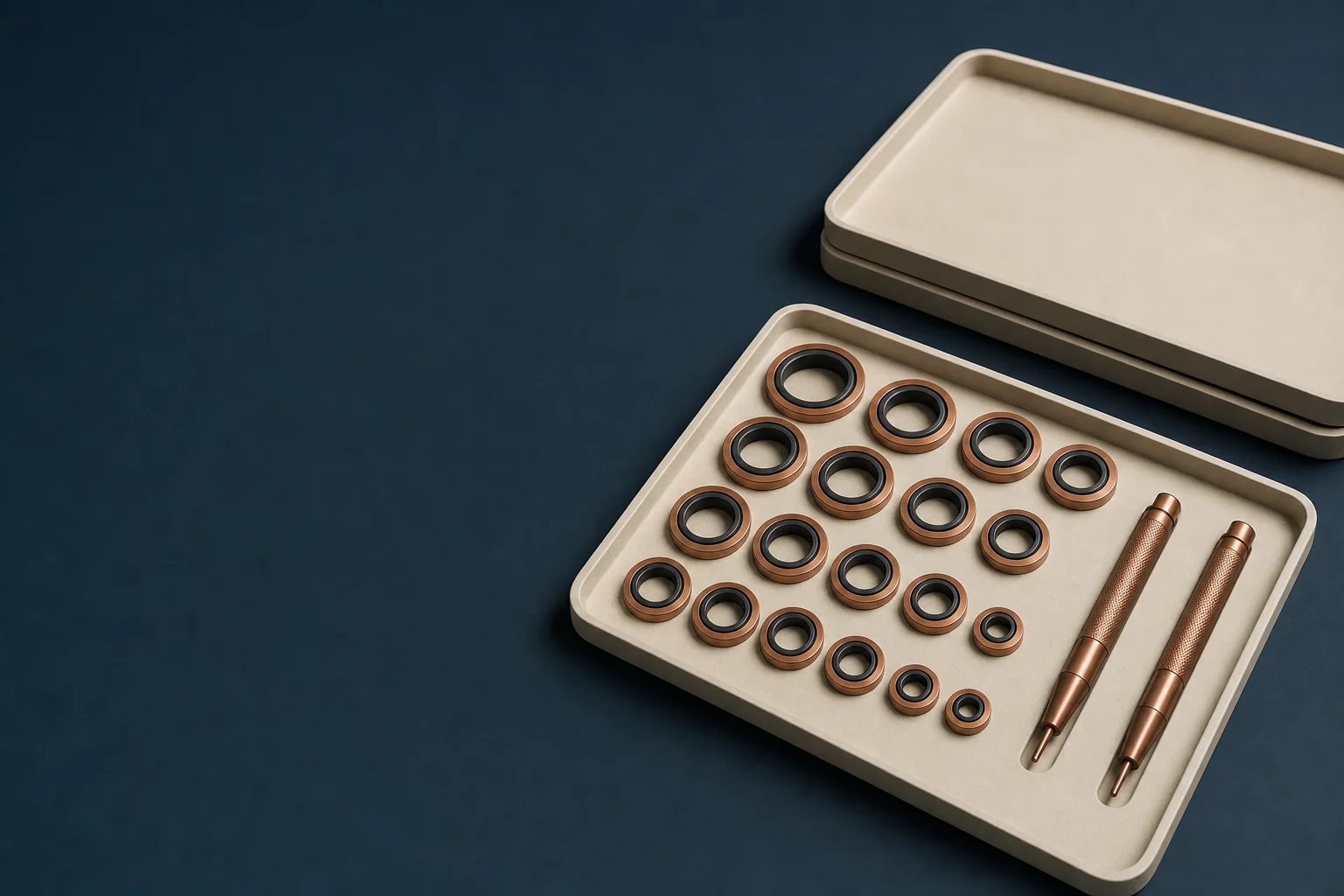
Enough that customs clearance never sits inside a recovery timeline. Classify parts by failure mode and consequence: items whose failure stops production are stocked in country, long lead time items too regardless of failure rate, and everything else ships on demand.
Korean fabs frequently ask for consignment inventory, meaning stock held at or near the site while title stays with the supplier until consumption. It solves the customer’s availability problem with your working capital, so the agreement must specify ownership, insurance, consumption reporting, obsolescence on upgrade, and what happens if the relationship ends.
According to the U.S. International Trade Administration’s South Korea Country Commercial Guide, goods in a designated bonded warehouse may be stored for six months and goods in a patent bonded warehouse for one year, while comprehensive bonded areas carry no time limit, and duties are payable only when goods are cleared through customs. The same guide adds that storage fees are relatively high and that the availability of a bonded warehouse to maintain inventories is limited, which makes bonded storage a customs instrument rather than a stocking strategy. Most suppliers hold their working Korean spares with a third-party logistics provider near the fab clusters, with a smaller consignment set at the site itself.
Who Runs Preventive Maintenance, and Who Pays for It?
Usually the fab does, through its own equipment engineering organization and its maintenance subcontractors. The supplier’s PM contract is the exception you have to be able to price: the warranty period, newly installed tools, and subsystems the fab will not open. Applied Materials describes its Applied Global Services segment, in its annual report for the fiscal year ended 26 October 2025, as providing services, spares, and factory automation software through a global distribution system and trained field engineers located near customer sites. A fab asking whether you offer a scheduled maintenance contract is comparing you against that reference. Several of your tools on one site consume engineer days every month whether or not anything breaks, so price maintenance as a service line rather than absorbing it into equipment margin.
What Escalation Path and Language Do Korean Buyers Expect?
Korean at first contact, without exception. The person who calls when a tool goes down is an equipment engineer working under production pressure, and requiring that person to operate in English during a fault adds delay and resentment. Korean-language support covers service reports, maintenance records, and parts documentation as well as phone calls. One Korea-specific mechanic, offered as practitioner observation rather than documented practice: first contact from a fab equipment engineer during a fault typically lands in a KakaoTalk group chat that includes your named engineers and the formal ticket follows afterward, which is exactly why a resident or near-site engineer beats a hotline.
Buyers also expect a documented escalation matrix: who is contacted at each severity level, within what time, and who at your headquarters can commit resources. Seoul runs seven to eight hours ahead of continental Europe and thirteen to seventeen hours ahead of the contiguous United States, so a fault at 9 a.m. Seoul time reaches a European team in the middle of the night. An escalation path that depends on headquarters being awake fails its first serious test.
What Warranty and SLA Terms Do Korean Fabs Ask For?
These terms are negotiated rather than standardized, but the asks recur. Korean buyers commonly seek a warranty period starting from acceptance or fab qualification rather than shipment, an availability commitment expressed in SEMI E10 terms, response and restoration times graded by fault severity, spare parts availability guaranteed for the tool’s service life, a resident engineer assigned to the account where the tool is a bottleneck, and service credits when commitments are missed. Governing law is frequently proposed as Korean law with arbitration in Seoul, a point for Korean counsel rather than a concession at the table.
The measurement basis causes more disputes than the targets do, so define how availability is calculated, which time is excluded (customer-induced faults, facility failures, consumable exhaustion, scheduled maintenance), and what data source is authoritative. A modest uptime number with a clean definition beats a headline number with vague carve-outs.
What Does Semiconductor After-Sales Service in Korea Cost to Staff?
Salary is the smallest surprise. Korean employers carry statutory social insurance of roughly 10 to 11 percent of gross salary across national pension, health insurance, long-term care insurance charged as a rider on the health premium, employment insurance, and industrial accident insurance, on Korean Tax Expert’s 2026 rate table. The national pension rate rose to 9.5 percent of wages on 1 January 2026, split evenly between employer and employee, the first step toward 13 percent by 2033, according to Lockton’s 2026 summary. The Employee Retirement Benefit Security Act adds severance of at least 30 days of average wages per year of service, gated on two conditions that Ask Korea Law’s 2024 guide to the statute sets out: at least twelve months of continuous service, and an average of at least 15 hours of work per week over a four-week period.
Working time is misread in both directions. Korea’s Labor Standards Act caps working time at 40 regular hours under Article 50 plus up to 12 hours of extended work per week under Article 53, and Article 11 applies the Act to workplaces that regularly employ five or more people, per the Act’s English text in the ILO NATLEX database (2021 amendment). The threshold counts every employee of the Korean entity, not just the service team, so a subsidiary with a country manager, an administrator, and three engineers is already inside the Act. Below five, Articles 50, 53, and 56 fall away together under Article 7 and Appendix 1 of the Act’s Enforcement Decree, which means the premium arithmetic arrives with the fifth hire. Coverage redundancy bites earlier: holidays, illness, and two simultaneous faults land on the same person. No organization covering a fab around the clock stays under five for long. At five employees the cap applies, and the mechanism Korean service organizations use for genuine on-call work is Article 63, which excludes employees engaged in surveillance or intermittent work from the working hours, recess, and holiday provisions where the employer has obtained the approval of the Minister of Employment and Labor. That approval is granted case by case.
Premium pay is the largest driver of a continuous coverage model. Article 56 of the same Act requires at least 50 percent of ordinary wages on top of ordinary wages for extended work, at least a further 50 percent for night work between 10 p.m. and 6 a.m., and 50 percent for holiday work up to eight hours with 100 percent beyond. KOTRA’s 2025 Labor Laws in Korea guide states the same rates. The premiums are separate obligations that apply together, so the Saturday 3 a.m. callout this post opens with sits in the most expensive band the statute produces.
The special extended work scheme for semiconductor research and development, which the Ministry of Employment and Labor extended in March 2025 from three months to six months per authorization at up to 64 hours a week, covers research and development rather than field service. It has barely been used: of 62 applications since the guideline changed, four sought the full six months, per Asia Business Daily on 12 August 2026 citing ministry data.
Then add the lines that rarely appear in the first budget: a service vehicle per engineer, calibrated instruments, cleanroom garments, factory training for Korean hires, translated documentation, and spare parts capital sitting in country.
Which Delivery Model Fits: Own Team, Distributor, or Third Party?
Four commitment levels exist, and each fits a specific situation.
Your own service team gives full control, a direct failure-data loop into engineering, and the strongest commitment signal, at the highest fixed cost and with a Korean entity required. It becomes justifiable once the installed base supports at least two engineers.
Distributor-provided service is the fastest to stand up and the default entry route for smaller suppliers. A capable distributor already employs Korean-speaking engineers, holds site access, and carries the customer relationship, at the cost of margin and a layer between you and the raw failure data. It works when the distributor’s engineers are certified on your tool and the obligations carry headcount and response commitments, which is why distributor selection criteria should weigh the technical bench rather than the sales roster.
A third-party service partner suits a small installed base and a well-scoped need: installation support, preventive maintenance execution, parts logistics, and basic diagnostics. Independent firms rarely build deep expertise in one supplier’s proprietary tool, so this model works best alongside remote engineering support.
A resident engineer (상주 엔지니어) sits above all three. For bottleneck tools Korean fabs expect a named engineer stationed on site, or in a co-located vendor office near the fab cluster, working the customer’s installed base full time. That is a different commitment from an engineer on site the same day, and on a tool that gates wafer starts it is often the term that decides the qualification.
Whichever model you name, three administrative gates have to clear before anyone can be dispatched. Your service organization needs a Korean business registration number, the ten-digit National Tax Service identifier without which it cannot issue a tax invoice under the Value-Added Tax Act, and so cannot be paid for a service call, as Korea Business Hub’s 2026 guidance sets out. It needs registration in each fab’s supplier and contractor portal, with insurance certificates, safety records, and engineer credentials loaded before a work order can be raised. And every engineer needs briefing on the site’s camera and device restrictions. These are the items that stall a first service call.
Most entries sequence the models: distributor or third-party service first, then a direct Korean field service engineer once the installed base justifies it, then a team as volume grows. The model you name during qualification has to be the one you can fund. Inquivix Technologies builds representation and service structures for foreign clean-process and equipment suppliers, and its guide to entering Korea’s semiconductor market covers the import and installation layer.
Frequently Asked Questions
Do Korean fabs require a local service engineer before they will qualify a supplier? Requirements vary by tool criticality, but Korean fab procurement treats in-country service capability as part of the vendor risk assessment rather than a later commercial detail. A supplier without a credible local answer, through its own engineer, a distributor, or a service partner, carries a structural disadvantage.
Can a Korean distributor provide adequate after-sales service? Yes, when the distributor has trained engineers on your specific tool and the agreement specifies headcount, response commitments, parts stocking, and escalation. Verify the bench by asking how many engineers they employ, which products those engineers support today, and who would own your line. Service written into an agreement but never staffed is the common failure mode.
What should a Korea service level agreement include? Response and restoration times graded by fault severity, an availability commitment defined in SEMI E10 terms with explicit exclusions, spare parts availability for the tool’s service life, a named escalation matrix, and Korean-language support and documentation. Most SLA disputes are arguments about calculation rather than performance, so fix the measurement basis in writing.
A service promise made to win a qualification and then missed ends the relationship, and the reputation travels faster than the next sales cycle. Inquivix Technologies provides representation, technical coordination, and after-sales infrastructure for global semiconductor equipment and materials suppliers entering Korea. To pressure-test your service model or your draft SLA before you sign, reach Joon K Lee at joon@joonklee.com.